
Hale County Court Records After Arrest
A Hale County arrest and a Hale County court record are linked, but they are not the same record. Booking starts at the jail with intake, custody status, and initial arrest charges. The court record begins or develops when a complaint, information, indictment, or other charging paper is filed with the proper court. The prosecutor may change the charge level, decline a count, add a count, seek an indictment, or resolve a case in a way that differs from the first jail entry.
The official online case route is the Hale County Tyler PublicAccess portal, which the county links as civil and criminal public access. During research, the portal displayed a JavaScript and CAPTCHA human-verification gate before the search fields. Because of that gate, exact case-search labels could not be inventoried. The portal remains the county-linked court access point, but users may need a normal browser and may need to contact the clerk if the portal does not show a case right away.
The court portal captured from the Hale County Tyler PublicAccess source shows why field names are not listed as verified here.
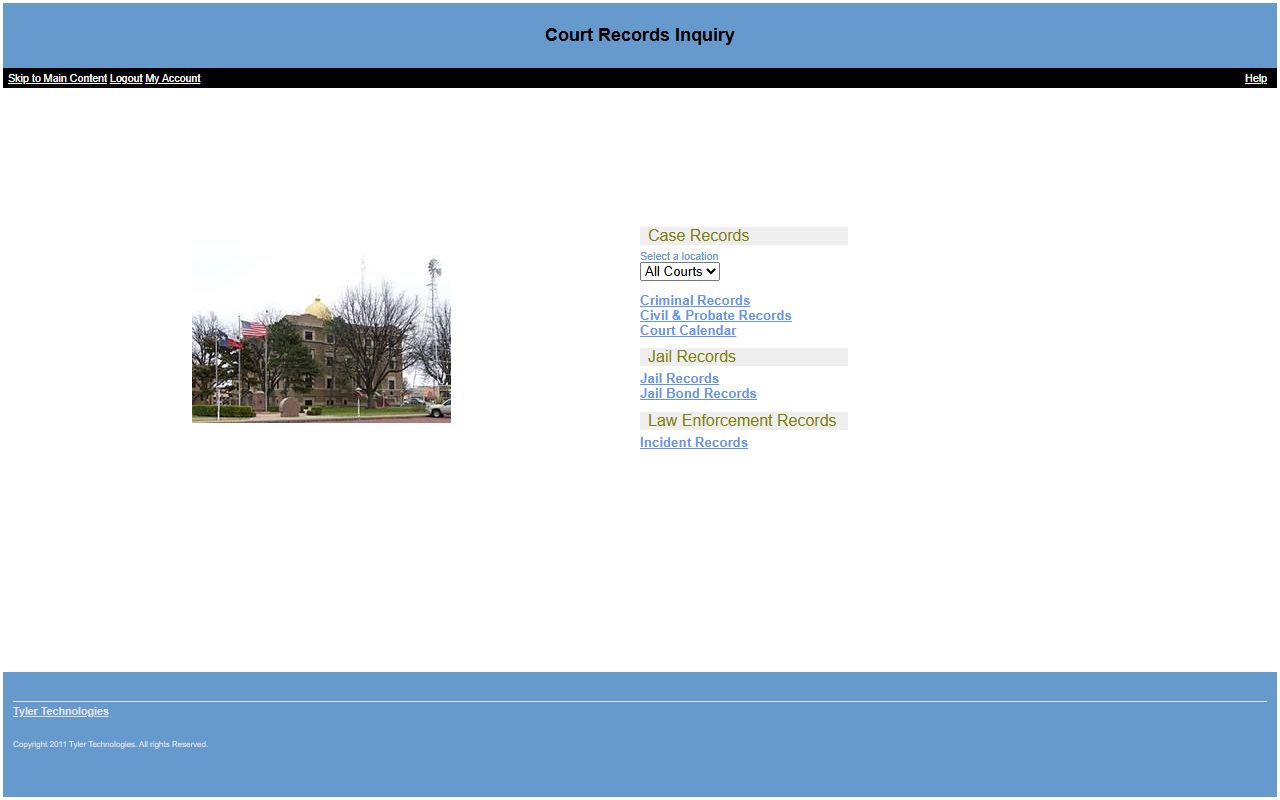
The portal is still the official online starting point, but the CAPTCHA limit means clerk contact remains an important access channel.
Find Hale County Court Records After Arrest
The arrest to court pathway is usually arrest, booking, magistration, prosecutor review, charging document, court case, and disposition. The jail roster can confirm that a person was booked, but it may not show the final charge filed by the prosecutor. If no court case appears right after an arrest, the case may not have been filed or indexed yet. For district-court criminal records, the District Clerk is the custodian of the two district courts and the office reports paperless civil, family, and criminal records.
- Use the jail roster or jail phone to confirm booking, custody status, arresting agency, and initial arrest charge.
- Open Hale County PublicAccess and complete any browser verification required by the Tyler portal.
- Search by the fields that are visible in the portal, such as defendant name or case number if those options appear.
- Open the case record and compare filed charges to the jail booking charge.
- If the case is not visible, contact the District Clerk for district-court records or the relevant lower court for that charge type.
- For felony prosecution questions, contact the District Attorney's office, while keeping case-file requests with the clerk.
For custody-only details, use Hale County jail inmate records. For booking photos, use Hale County jail mugshots. The court record is the place to check filed charges, status, hearings, warrants tied to a case, and final outcomes.
Hale County Court Search Fields
The Tyler PublicAccess field inventory is limited because the public portal was blocked by human verification during inspection. Exact field names should not be invented. In practice, many court portals support name or case-number search, but that was not verified for Hale County during the research window. Use the labels displayed by the portal in the current browser session.
| Field Label | Type | Required | Notes |
|---|---|---|---|
| CAPTCHA or human verification | JavaScript challenge | Required before search | Portal said JavaScript must be enabled to verify the user is not a robot. |
| Case search fields | Not visible behind CAPTCHA | Not captured | Likely Tyler case-search fields, but exact Hale County labels were not verified. |
| Search buttons or tabs | Not visible behind CAPTCHA | Not captured | Recheck in a browser with JavaScript if exact labels are needed. |
Important: A missing online case does not prove no case exists. Filing, indexing, CAPTCHA access, sealing, and court type can all affect visibility.
Hale County Arrest Charge Documents
Charging documents are the papers that turn arrest facts into a court case. The District Attorney's Office prosecutes felony offenses from state jail felonies through capital offenses. A complaint may start a criminal matter, an information is a prosecutor-filed charging paper, and an indictment is returned by a grand jury. The correct document depends on charge type, court level, and the path chosen by law.
| Document | Who Uses It | What It Means |
|---|---|---|
| Complaint | Officer, complainant, or prosecutor depending on context | A sworn accusation or starting paper tied to a criminal allegation. |
| Information | Prosecutor | A formal prosecutor-filed charge used in many criminal cases. |
| Indictment | Grand jury | A grand jury charging instrument often used for felony prosecution. |
Because the District Attorney decides how felony charges proceed, the court record after a Hale County jail arrest may look different from the first jail entry. A booking charge is not a conviction, and it is not always the final filed charge.
Hale County Charge Status
Charge status terms show where a case stands. They can also explain why two records seem to conflict. A jail roster may show the arrest charge used at booking. PublicAccess or clerk records may later show an amended, reduced, dismissed, or indicted charge. Read the court record date and status carefully before treating a charge as current.
| Status | What It Means |
|---|---|
| Pending | The charge or case is open and has not reached final disposition. |
| Filed | Formal paperwork has been filed with the court. |
| Indicted | A grand jury returned a felony charging instrument. |
| Amended | Charge wording, count, or degree changed after filing. |
| Reduced | The charge level was lowered by plea, amendment, or prosecutor decision. |
| Dismissed | The court or prosecutor ended that charge without a conviction on that count. |
| Disposed | The case has a recorded outcome, such as dismissal, plea, verdict, or other final action. |
Hale County Court Record Offices
Two local offices matter for court records after a jail arrest. The District Clerk is the records custodian for the two district courts and should be used for district-court case-file questions. The District Attorney prosecutes felony offenses and can answer certain prosecution-office routing questions, but the DA is not a substitute for the clerk's case file. The official District Clerk and DA pages should be used for current office details.
Hale County District Clerk
Julie Kelly
Day, Boyd, LaFont Justice Center
225 Broadway, Suite 4
Plainview, TX 79072
806-291-5226
Monday-Friday 8:00 a.m.-5:00 p.m., closed 12:00-1:00 p.m.
Hale County District Attorney
Wally Hatch
Day, Boyd, LaFont Justice Center
225 Broadway, Suite 1
Plainview, TX 79072
(806) 291-5241
Monday-Friday 8:00 a.m.-5:00 p.m., closed 12:00-1:00 p.m.
Hale County Bond and Warrants
Bond and warrants sit between jail custody and court records. Texas Code of Criminal Procedure Article 15.17 requires an arrested person to be taken before a magistrate without unnecessary delay for warnings and bail-related proceedings. Texas Code of Criminal Procedure Article 17.15 gives the rules for fixing bail, including offense circumstances, ability to make bail, and public or victim safety.
| Item | How It Connects to Court Records After Arrest |
|---|---|
| Cash bond | Money posted under court or jail procedures to secure appearance. |
| Surety bond | A bond company posts bond under the court's requirements. |
| PR bond | Release on personal recognizance when approved by the court. |
| No-bond hold | A court or other agency hold may block release even when another charge has bond. |
| Bench warrant or capias | A court order for arrest, often tied to failure to appear or case noncompliance. |
No active official Hale County searchable warrant portal was located in the inspected pages. The sheriff navigation includes most-wanted links, but not a complete active-warrant database. No verified sheriff or police mobile app with warrant-search or roster features was located either. Use the court portal, sheriff phone, jail phone, issuing court, or a written Texas Public Information Act request for existing warrant or arrest records, recognizing that law-enforcement exceptions may apply.
Hale County Charges vs Convictions
A charge is an accusation. A conviction is a final court outcome based on a plea, verdict, or adjudication. That difference is central when reading court records after a jail arrest. The arrest may be real, the booking may be real, and the charge may still be pending, reduced, dismissed, or never filed as first listed by the jail.
| Point | Charge | Conviction |
|---|---|---|
| Record stage | Accusation or filed count | Final guilt result or plea outcome |
| Proof level | Probable cause or charging decision | Beyond a reasonable doubt, plea, or adjudication process |
| Can change? | Yes, it may be amended, reduced, added, or dismissed | Changes only through later court action or legal relief |
| How to verify | Check portal, clerk, and charging document | Check final judgment or disposition entry |
Hale County Sealed vs Expunged
Some court records after an arrest may be restricted from public view. Texas Code of Criminal Procedure Article 55.01 defines eligibility for expunction of qualifying arrest records. Expunction can affect access to arrest, booking, and court records. Sealing and expunction are not casual website corrections. They are legal processes that depend on case outcome and court order.
| Point | Sealed | Expunged |
|---|---|---|
| Public visibility | Hidden from many public searches | Treated as removed or destroyed under the order |
| Agency access | Some official access may remain | Access is more limited and order-specific |
| Common reason | Eligible non-disclosure or restricted record | Eligible dismissal, acquittal, pardon, or other qualifying result |
| Record holder action | Follow the court order | Follow the expunction order |
Texas Government Code Chapter 552 is the public-information request law, but it does not override every confidentiality rule. Juvenile records, active investigations, sealed records, expunged records, and sensitive law-enforcement material may be withheld, redacted, or handled through an Attorney General process.
Hale County Background Use Limits
Public court records after a jail arrest can be useful for personal awareness, case tracking, and verifying whether a charge was filed or resolved. They are not the same thing as a compliant consumer background report. Employment, housing, credit, insurance, licensing, and similar screened decisions have separate legal requirements. A casual lookup should not be used as a substitute for a compliant process.
Important: Do not use jail, court, or custody lookup information for FCRA-covered decisions such as employment, housing, credit, insurance, or licensing.